Ask what a local reading would change
A weather station is useful when it supports a decision: whether to protect tender plants, inspect drying pots or postpone irrigation after substantial rain. It is less useful when it produces numbers you never act on. Begin with the uncertainty you notice most often. A simple maximum–minimum thermometer may explain cold damage in a low corner. A manual rain gauge may settle whether a passing shower delivered meaningful water. You do not need every available measurement to understand one recurring garden problem.
Map the garden’s small climates
Walk the garden at different times rather than assuming it has one consistent climate. Walls absorb and release heat; hedges interrupt wind; low ground can collect colder air on still nights. Paving may warm nearby containers, while a shaded border stays cool and damp. Note these differences beside plant performance. A thermometer near the house may be convenient to read but may not represent an exposed vegetable bed. The aim is not to discover the garden’s single “true” temperature. It is to identify conditions that affect a particular plant or task.
Give rainfall a fair measurement
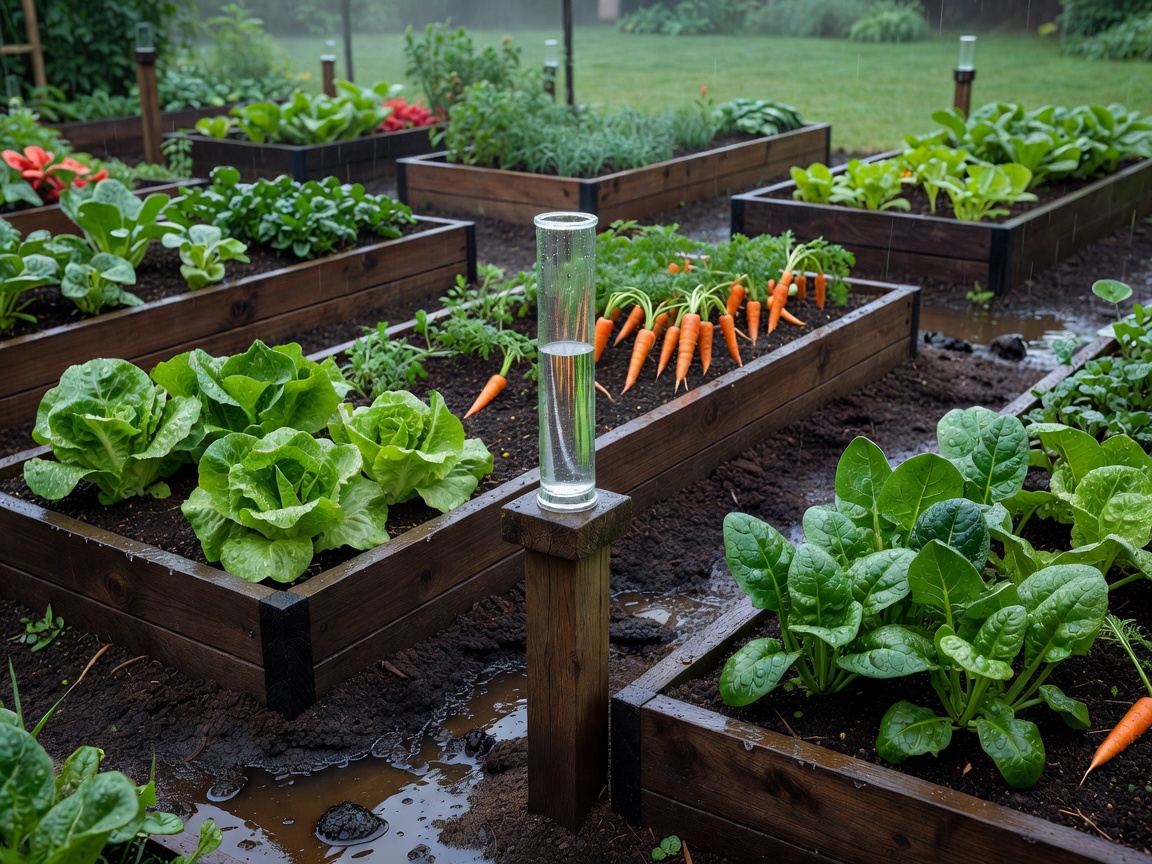
Position a rain gauge upright and level in an open location, away from roof runoff, irrigation spray and nearby obstacles that intercept or redirect rain. Follow the gauge’s siting instructions and use a consistent reading routine. Empty a manual gauge after recording the amount, and inspect automatic tipping mechanisms for debris or insects. Wind can reduce the amount collected, so a small garden instrument is not a perfect reference. Remember that rainfall measured in the open does not prove that water reached soil beneath dense foliage or pots tucked under an eave.
Keep direct sun out of air readings
A bare temperature sensor in sunshine can become warmer than the surrounding air. A suitable radiation shield allows airflow while reducing that heating effect. Mount equipment according to its guidance and keep it away from obvious heat sources if you want a representative air reading. If you deliberately measure beside a warm wall, label the record accordingly. For frost-sensitive planting, compare a well-sited general reading with observations near the vulnerable area. Leaves can cool below the measured air temperature on clear nights, so a reassuring dashboard number does not guarantee freedom from frost.
Recognize the compromise in combined stations
Rain, temperature and wind instruments have different siting needs. A compact all-in-one station makes installation easier but cannot always place each sensor ideally. Wind measurements are especially influenced by roofs, fences and trees. In a small enclosed garden, a sensor may describe that sheltered location rather than the wider wind. That can still be useful if you label it honestly and compare trends consistently. Check mounting access, battery replacement, radio range and whether logged data can be exported before selecting features that are difficult to maintain.
Use forecasts and measurements together
Local records explain what has happened; professional forecasts help you prepare for what may happen next. Consult services such as the Met Office or the National Weather Service where relevant to your location, and use official warnings for hazardous conditions. Do not rely on a consumer station’s decorative forecast symbol for storm safety. Weather-based irrigation estimates also require care. FAO-56 describes reference evapotranspiration methods, but a domestic app’s calculation is not a direct measurement of your plants’ needs. Check soil moisture and the condition of the planting before making substantial changes.
Keep a record short enough to maintain
A useful log can be brief: date, rainfall, notable temperature, watering and a plant observation. Record where instruments are positioned and note any relocation, battery replacement or cleaning. Compare similar periods rather than treating one unusual day as a trend. Review whether the information has changed your decisions after a few weeks. If a gauge and occasional thermometer check already answer your questions, stop there. The best monitoring arrangement is one you understand, can service safely and continue using when the novelty of the display has passed.
Bring weather observations into a watering routine without letting a forecast override what you find in the soil.