Start with the question a probe can answer
A container wilts every afternoon, yet the compost still feels damp. Another pot dries out between visits. Both look like watering problems, but they may need different responses. A moisture sensor can help you follow how quickly a particular root zone dries. It cannot tell you, on its own, whether roots are healthy, drainage is adequate or midday wilting is caused by heat. Begin by recording the plant, container, growing medium and exposure. That context makes a reading useful rather than merely interesting.
Know what is being measured
Many affordable probes infer moisture from electrical properties. Resistive designs measure how easily current passes between contacts; capacitance-based designs respond to changes in the surrounding material’s dielectric properties. Neither method directly asks a plant whether it is thirsty. Salts, temperature, soil texture and installation can affect results. More specialized instruments, such as tensiometers, estimate the effort roots need to extract water, but require their own installation and maintenance. Check the instrument’s documentation instead of assuming all devices use the same scale.
Find a representative position
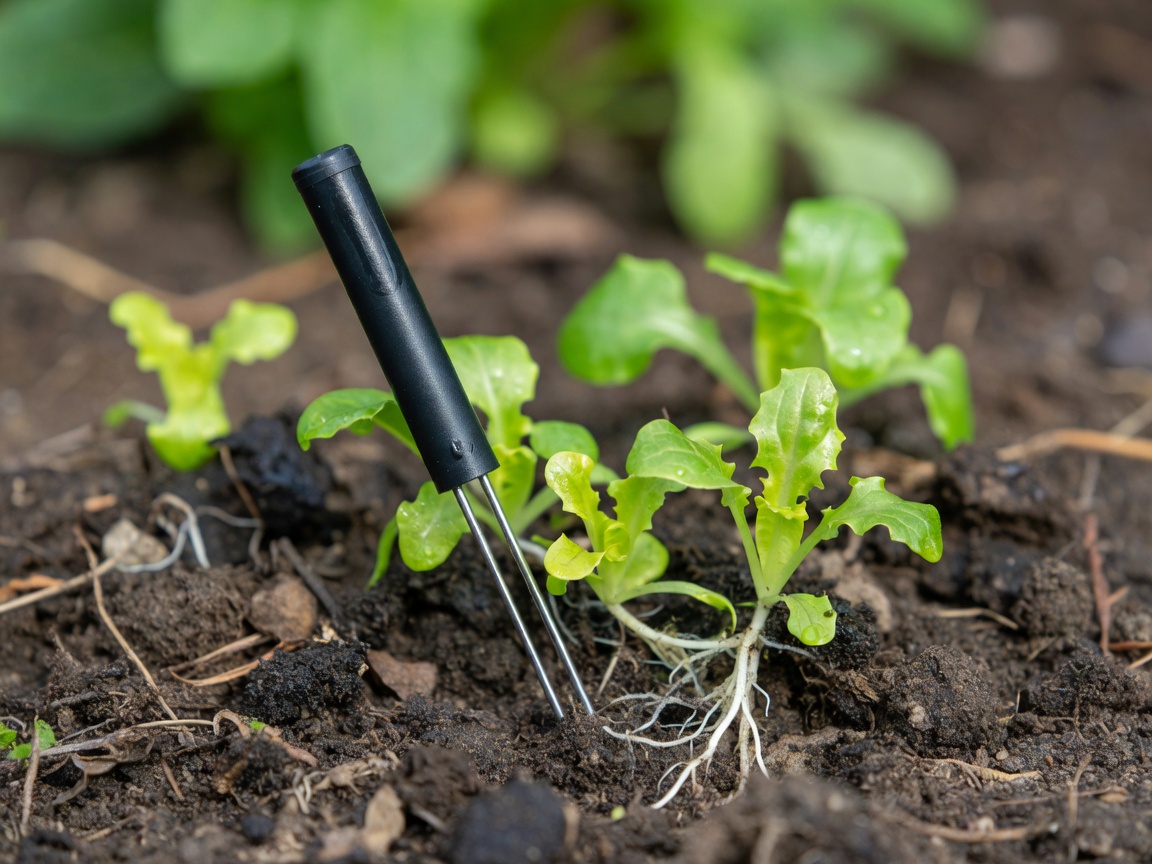
Place a probe within the active root zone according to its instructions. Avoid pushing it against a pot wall, leaving air gaps around the sensing area or positioning it directly beneath an emitter. A spot that is unusually wet or shaded can make the rest of the bed appear better supplied than it is. In a mixed border, one reading cannot represent established shrubs, shallow-rooted annuals and a sunny edge equally. Group similar plants and conditions; compare locations manually before deciding whether another sensor is justified.
Build a local reference, not a magic threshold
Water normally, allow excess water to drain, and record the reading alongside a careful hand check. Repeat as the soil dries through a typical interval. Note whether the soil is cool and cohesive, lightly moist or becoming dry at the relevant depth. Avoid forcing a valuable plant into severe stress merely to find a low number. A percentage on one inexpensive meter may be a relative scale rather than calibrated volumetric water content. Even a calibrated percentage must be interpreted in relation to the soil and the plant.
Let patterns support a small decision
Look at several observations rather than reacting to every fluctuation. A pot that dries much faster after a warm, windy day may need a shorter interval between checks. A bed that remains wet long after watering may need less irrigation, better drainage or investigation of compaction. Do not simply increase the duration because one sensor reports dry conditions: a blocked emitter could be leaving that one location dry while the rest is already saturated. The next useful action may be inspecting the plumbing, not changing a threshold.
Understand connectivity and maintenance
Before choosing a connected probe, inspect how it reports a lost connection, low battery or stale reading. A dashboard can continue displaying yesterday’s number without making the age obvious. Check wireless coverage at the installed position and confirm whether readings remain accessible without a subscription or cloud service. Clean exposed surfaces as the manufacturer advises, check seals, and inspect for corrosion or damage during routine garden visits. Remove or protect equipment when freezing conditions exceed its specification. Keep a dated manual observation to catch gradual drift.
Decide whether it earns its place
A sensor is most helpful when it resolves a repeated uncertainty: an inaccessible planter, a bed with variable drying or a watering zone you are trying to tune. It is less compelling when you already inspect a few accessible pots every day. A trowel and a notebook can provide a dependable starting point. If you connect moisture readings to automatic watering, first run the sensor as an observer. Then introduce conservative limits, confirm the controller’s failure behavior and retain a manual shutoff. Good automation preserves your ability to notice what the device has missed.
For the next step, build a watering loop around reliable delivery, not a number alone.