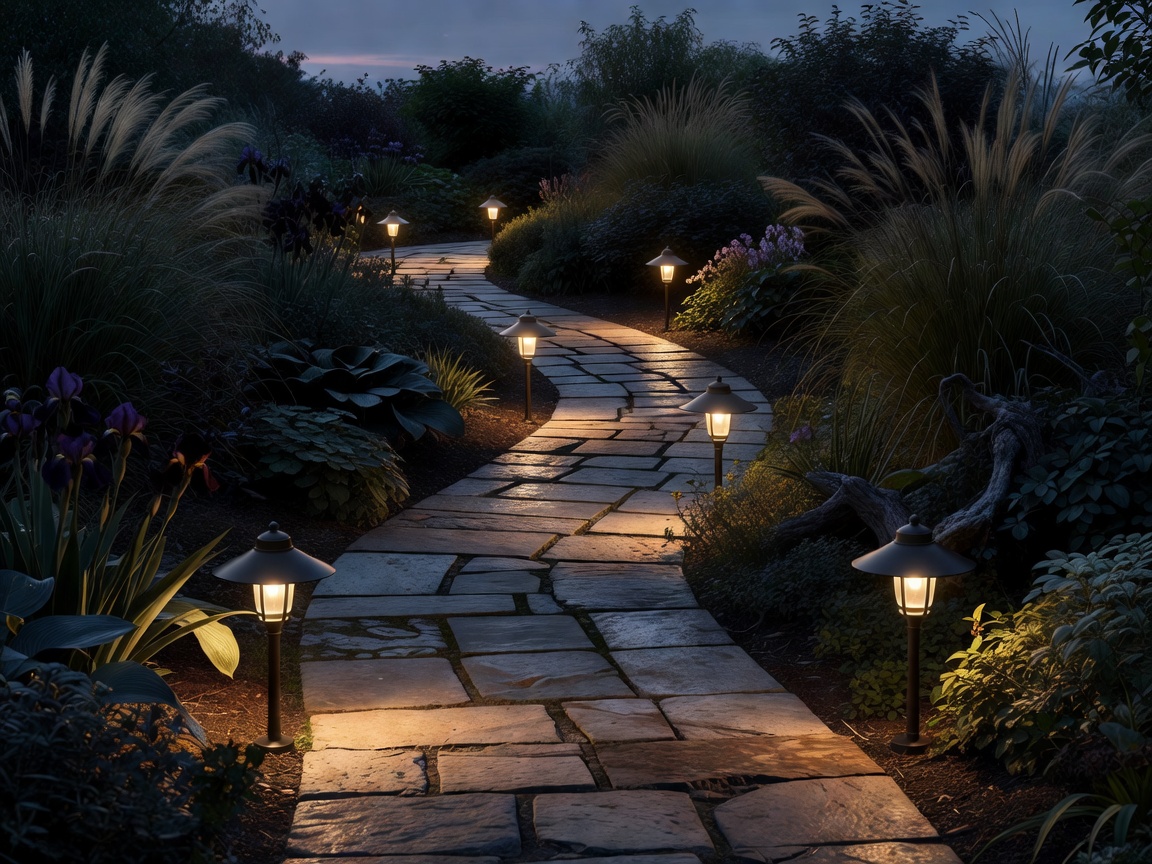
Begin with a walk, not a lighting catalogue
Walk the garden route at dusk with a portable light. Notice steps, changes of surface, gates and obstacles. Decide where someone genuinely needs help seeing, rather than treating every border as a display. Existing indoor light may already reach part of a patio. A small fitting aimed at a difficult step may solve the problem more effectively than several bright fixtures. Consider visitors, reduced vision and mobility needs, but do not assume that more brightness automatically improves visibility. Strong contrasts and glare can make a route harder to read.
Put light on the surface you need
Choose shielding and positioning that keep the light source out of normal sightlines and direct output downward. Look at the fitting from seated height, from upstairs windows and from the neighboring boundary. A low lamp can still shine directly into someone’s eyes if its luminous face is exposed. Avoid throwing light across a whole lawn merely to mark its edge. Use the least output that makes the task clear, then reassess after your eyes have adjusted. Good placement can reduce the amount of light you need without compromising the route.
Aim at the path.
Keep planting dark.
Control the hours as carefully as the beam
A timer, motion sensor or simple switch can prevent useful task lighting from becoming all-night illumination. Match the control to how the space is used. A motion sensor that repeatedly reacts to moving vegetation can be more disruptive than a short scheduled period. Test the detection area and the time before it switches off. Connected controls add convenience, but check whether a physical switch still works when the network is unavailable. Keep access lighting usable without requiring every visitor to install an app or understand a complicated scene.
Leave habitat outside the lighting plan
Darkness is part of a functioning garden, not unused space waiting for decoration. Artificial light can affect insects, bats and other wildlife, with effects depending on species, spectrum, intensity and timing. Retain unlit routes along hedges and avoid illuminating roosts, nests, ponds or flowering areas without a compelling need. Warmer light may reduce some short-wavelength output, but a warm lamp used excessively is not impact-free. Guidance from DarkSky International and the Bat Conservation Trust offers useful context. Seek specialist advice where protected species or sensitive habitats may be involved.
Be realistic about solar fixtures
Solar lights depend on how much energy their panels receive, battery condition, weather and seasonal daylight. A panel hidden beneath foliage may perform poorly even when the lamp itself is well placed. Winter reliability can differ substantially from summer performance. Check whether batteries are replaceable and whether the panel can be positioned separately from the light. Solar fittings can suit occasional decorative use, but do not assume they will provide dependable light for a critical step throughout the year. Test the actual location and retain a suitable alternative where visibility is important.
Respect the limits of outdoor equipment
Water, tools, pets and weather make the garden a demanding electrical environment. Use equipment explicitly suitable for its location and follow the manufacturer’s installation instructions. IEC 60529 IP ratings describe protection against ingress under defined conditions; they do not mean a product is suitable for every wet situation or for permanent submersion. Mains wiring, protective devices and buried cables must comply with local requirements and may need a qualified electrician. Extra-low-voltage systems still require compatible components and careful cable routing. Do not improvise waterproof connections or trail cables where tools can damage them.
Review the result after dark
Return to the route once the lights are installed. Can you see the step without seeing a harsh source? Is light entering a bedroom or crossing the boundary? Can fittings be reduced, redirected or switched off earlier? Inspect lenses, seals, mounts and cables during routine maintenance, and keep fixtures clear without removing habitat unnecessarily. Reassess after plants grow or paths change. A restrained system may contain fewer gadgets than you first imagined, but it can still make the garden easier to use while preserving the character of its dark hours.
Compose a lighting question with the route, obstacle and existing light conditions clearly described.