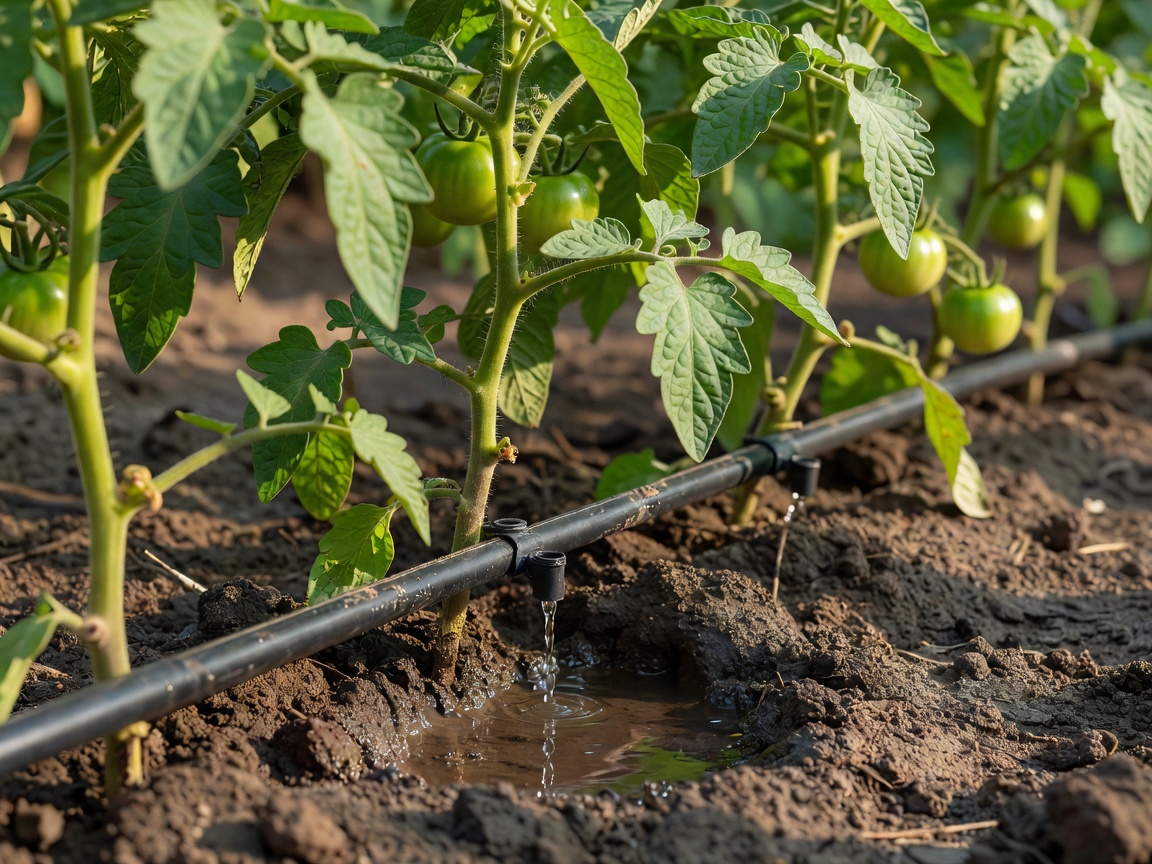
Look for the unevenness first
If one plant droops while its neighbor thrives, extending the entire watering cycle may create a second problem. Start by checking the soil, roots, exposure and delivery point. A blocked emitter, kinked tube or pot sheltered from rainfall can explain a local difference. A timer cannot correct those conditions simply by running longer. Draw a rough map of the area and mark plants with similar water needs. Include the tap, slopes and any beds that remain damp after rain. That modest sketch is often more valuable than an elaborate controller.
Make the water supply predictable
Drip components work within specified pressure and flow ranges. Check those requirements and use compatible filters and pressure regulation where the system calls for them. A long line with too many outlets can distribute water unevenly, especially across a slope. Follow the manufacturer’s limits rather than assuming any tubing arrangement will work. Connections to drinking-water supplies may require backflow protection under local rules; ask your water supplier or a qualified installer what applies. Keep hose connections secure and avoid arrangements that can draw contaminated garden water back into the supply.
Test delivery before setting a schedule
Run each zone while you are present. Look for leaks, disconnected fittings, spray reaching paths and emitters delivering little or no water. Where practical, collect output from comparable emitters for the same period and compare the amounts. Inspect how the soil wets beneath the surface afterward. Sandy soil may take water downward quickly, while compacted or heavy soil may pond or shed it. Shorter separated runs can sometimes improve infiltration, but they are not a substitute for addressing persistent drainage problems. Adjust to what the soil actually accepts.
Choose the simplest useful control
A mechanical timer may be sufficient when you want a tap to stop after a supervised watering session. A battery timer can repeat a schedule without home internet. A connected controller can make remote adjustments convenient, but introduces questions about signal coverage, accounts and service availability. Check whether schedules are stored locally, what happens after a power interruption, and how you operate the valve without the app. Remote access is not the same as remote verification: an app reporting “watering” does not necessarily prove that water reached the roots.
Use matched delivery and inspect the fastest-drying pot.
Create zones before complicating the schedule.
Test normal operation and failures before departure.
Use weather and soil as checks
Rain can justify delaying irrigation, but the amount caught in an open gauge may differ from what reaches pots beneath foliage or an overhang. A soil sensor can help, provided it represents the zone rather than one unusually wet spot. Begin with observation-only monitoring and compare the trend with manual checks. If you allow a sensor to inhibit watering, confirm what happens when its battery fails or communication stops. Set conservative limits on automatic operation where the controller supports them, and review any unexpected skip or unusually long run.
Prepare for the ordinary failures
Garden systems fail in unremarkable ways: a battery weakens, a filter clogs, a tube moves during weeding or an animal disturbs a fitting. Build inspections into the routine. Check the system during a run, not only when everything is switched off. Label valves and keep basic compatible spares where you can find them. Before a trip, run the arrangement long enough to see both wetting and drying behavior. Arrange a human check when the consequences of failure are significant, especially for vulnerable containers or a water supply that could leak continuously.
Revisit the routine as the garden changes
A schedule that suited young plants in spring may be wrong after roots expand, weather changes or containers become crowded. Review soil conditions after meaningful changes instead of treating the original program as permanent. Flush and service components according to their instructions, protect vulnerable parts from freezing, and follow local water restrictions. Automation should reduce repetitive switching, not remove observation. Keep a watering can available for exceptions, and be willing to simplify a system that creates more uncertainty than it resolves.
Read the root zone and check your local weather signals before changing the next cycle.